Can VR help with your Parkinson’s symptoms?
Virtual Reality (VR) might just be one of the more exciting ways to get active and manage your symptoms from home.
If you’re looking for a more exhilarating way to get active and manage your Parkinson’s symptoms from home, it might be time to dive into the exciting world of Virtual Reality (VR).
VR is a technology designed to drop its users inside immersive 3D environments, inviting them to explore a computer-simulated world as though they’re actually there. This could be anywhere from a virtual Zumba class to the summit of Mount Everest.
VR apps and games typically require users to wear a headset and pair of controllers to accurately track movement and display this virtual environment as though it’s before their eyes.
Is VR good for Parkinson’s?
A growing number of research studies and anecdotal evidence point to the benefits of VR in managing Parkinson’s symptoms.
One 2019 study looked at the results of 27 research papers to investigate the role of VR in Parkinson’s rehabilitation. The systematic review showed that participants in these studies experienced significant improvements in motor function, balance and coordination, cognitive function and mental health, quality of life and daily activities when using VR. You can learn more about that study hereopens in new tab.
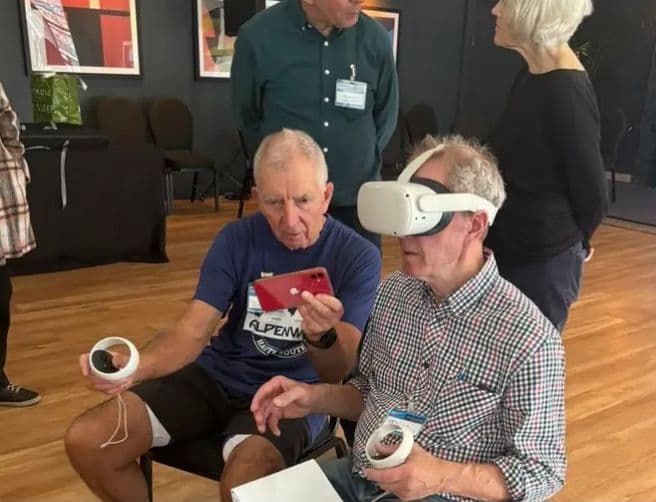
Dr. Keith Wilson is a Parkinson’s activist and is one of the co-organisers of Vixi Wellbeing’s VR classes in Darlington, County Durham. Keith discovered the benefits of this technology in regard to his own Parkinson’s symptoms after riding a VR rollercoaster in Orlando, when he realised that it offered a similar adrenaline spike to that he experienced while riding real rollercoasters at the park. Adrenaline is structurally similar to dopamine, a chemical that has been found to be low in people with Parkinson’s. It is already known that boosting the amount of dopamine in the brain can help manage Parkinson’s symptoms, meaning VR could be another way to do this alongside taking the drugs prescribed by your specialist.
Paul Morris is a Parkinson’s UK volunteer and Tech Guide reviewer. He has also experienced the benefits of VR. Paul has explored a variety of fitness and sports games, including boxing, dance and table tennis to name just a few.
“I try to mix it up so I do some boxing which is really high intensity cardio, and some of the other games which are more about reactions and may offer more of a neurological challenge,” said Paul.
Paul also finds that he is able to workout for longer and at a higher intensity while donning his VR headset than he might without and, while he is unsure if the technology helps his Parkinson’s specifically, he shared, “I think exercise is generally good and so anything that encourages me to do more must be good”.
What activities can you do in VR?
The real question here is what can’t you do! One of the biggest allures of VR is its ability to break down barriers and transport you almost anywhere in this world (or outside of it).
There’s an ever growing number of games, apps, movies and physical activities available to VR enthusiasts, with the exact titles and developers available depending on the headset you use. For example, people who own the Meta Quest headset (a VR device created by the company behind Facebook) can visit breath-taking travel destinations with Brink Traveler and National Geographic Explore VR, practice a huge variety of sports from boxing to dancing, and test their reflexes and rhythm with the popular arcade game Beat Saber.
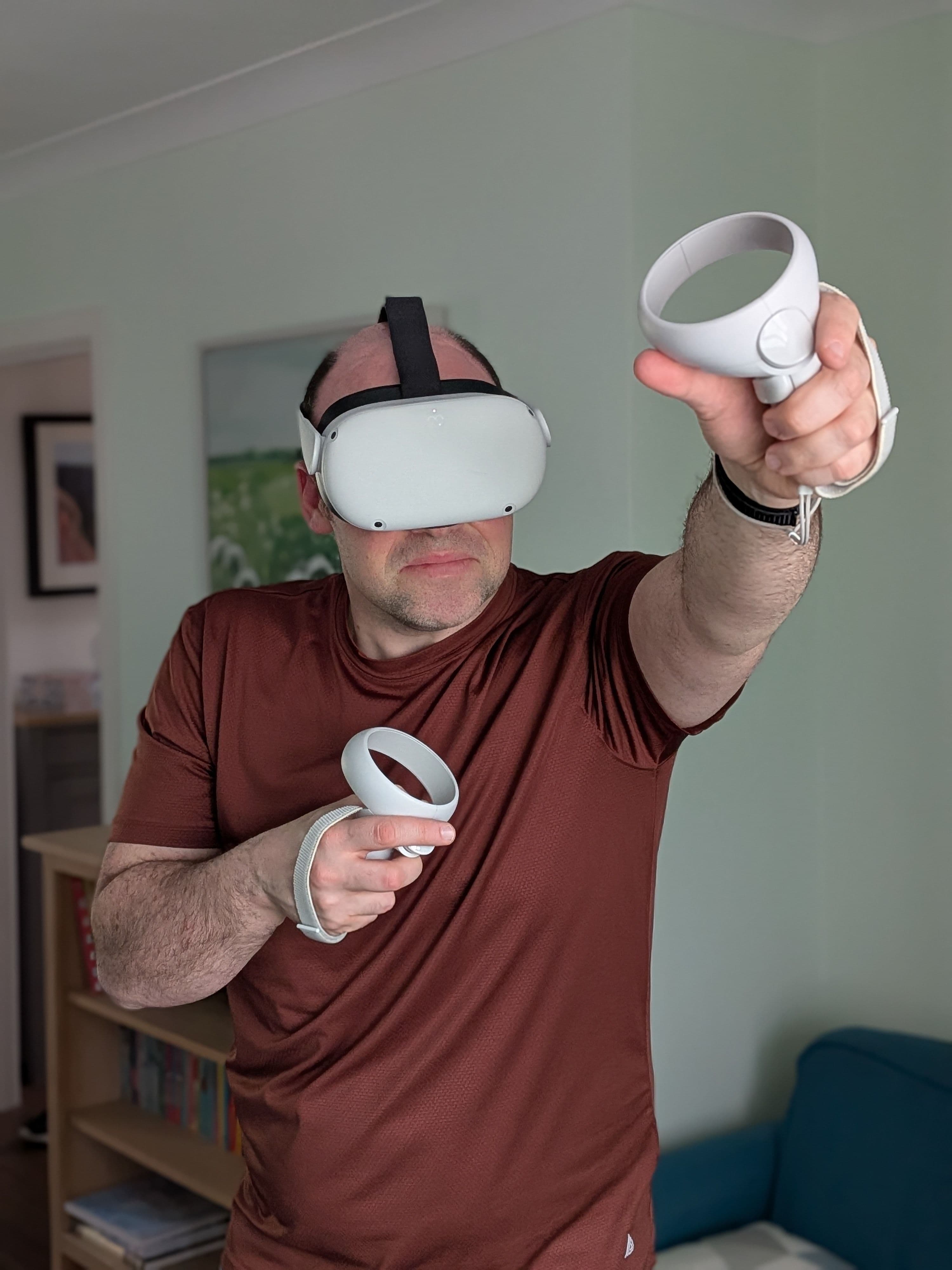
Some of Paul’s favourite titles include ‘Thrill of the Fight’ and ‘Les Mills Body Combat’ for boxing games, ‘Synthriders’ and ‘Les Mills XR Dance’ for rhythm and dance games and ‘Racquet Club’ and ‘Eleven Table Tennis’ in the racquet sports category.
VR can be enjoyed as a solo activity or with friends and family. In the North East of England, fitness director Victoria McFaul runs a weekly workshop designed to give participants with Parkinson’s a taste of the technology. You can learn more about these classes or contact Victoria directly on Vixi Wellbeing’s website linked hereopens in new tab.
What VR headset is best?
When it comes to which headset you should buy, there’s really no one size fits all. Companies like Meta, Sony, HTC and Apple all offer their own headsets, and they’re certainly not alone in the market.
For those wanting to dip their toes into the world of VR without spending a large amount of money, more bare-bones headsets that let you slot your phone in front of your eyes can be a good starting point.
The Meta Quest series is both Paul and Keith’s headset of choice thanks to its large array of apps. The most recent Meta Quest 3 model is able to scan your entire space and warn you of nearby objects to prevent you from tripping over a stray shoe or dog toy.
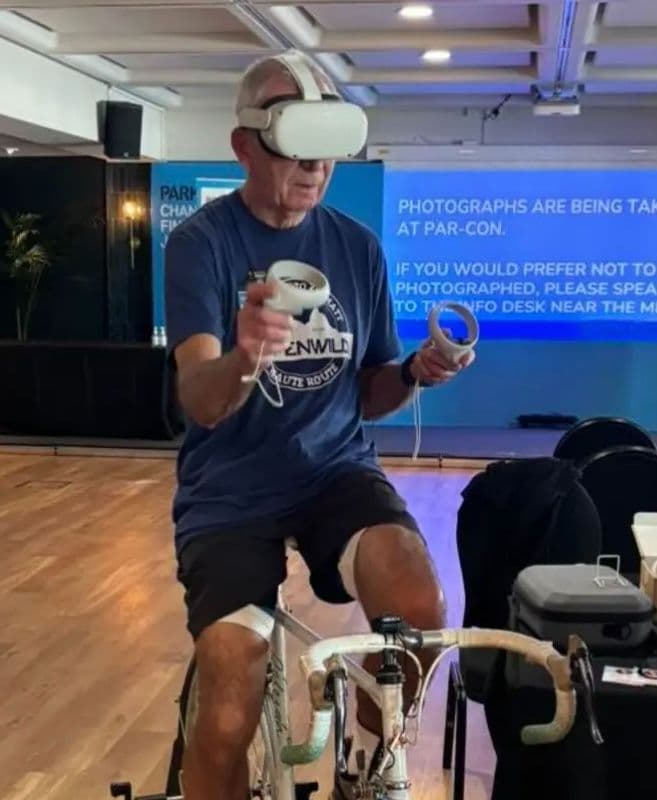
Keith has also experimented with Pico headsets, praising their graphical prowess though he found the number of educational apps to be more limited on this gaming-focussed platform. Pico headsets also have the added benefit of being able to track your leg movements, which can be very useful for those whose symptoms include issues with their stride and gait.
York-based company Recreo VR has been using modified Pico headsets to explore the benefits of VR for people with dementia. These headsets can be a good first step into VR, offer a substantial amount of user support and are designed specifically to be used while seated.
Rent a VR headset
If you’re looking for the most affordable way to get your hands on a VR headset, Keith and Victoria are currently trialling their own loan system through Vixi Wellbeing. You can contact the company to enquire about a rental using the same link shared above.
This first-of-its-kind rental scheme (which you can read more about in the Summer 2025 edition of Parkinson’s UK’s Progress magazine hereopens in new tab) allows you to borrow a VR headset for a period of three weeks to see if it helps you to be more active and manage your Parkinson’s symptoms.
The loan itself is free of charge, with the only expenditures being a set of AA batteries and the delivery fee needed to send it back at the end of your rental period. The rental headsets also come pre-loaded with an array of games, sports and educational content to play around with so you can get started exploring the virtual world right away.